
Functions, Effects, and Advantages of an Empty Bottle Packing Machine!
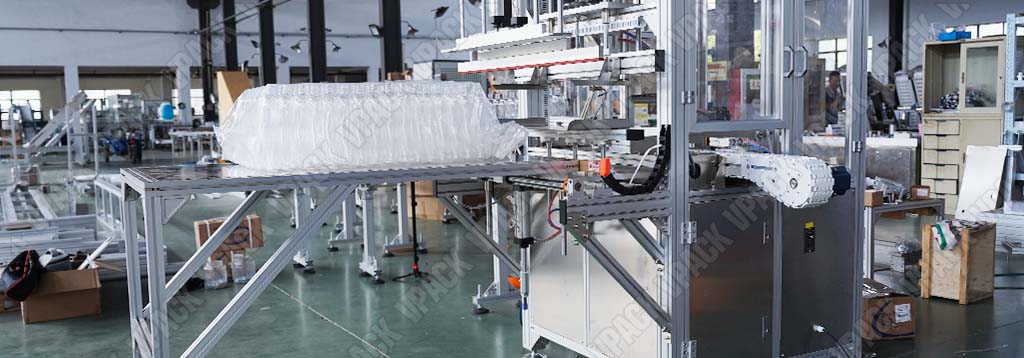
Empty bottle packing machine is a specialized device used to compress and pack empty bottles (such as plastic bottles, glass bottles, and aluminum cans). It is widely used in recycling industries, waste processing plants, and beverage production companies.
Functions
Compression and Packing: Compresses loose empty bottles to significantly reduce their volume for easier storage and transportation.
Automatic or Semi-Automatic Operation: Enhances efficiency and reduces manual labor.
Sorting and Processing: Can be used to sort and pack bottles based on material type (e.g., PET plastic bottles, aluminum cans, glass bottles).
Pollution Reduction: Prevents scattered waste bottles and helps reduce environmental pollution.
Effects
Space Saving: Reduces the volume of empty bottles by 50%-90%, significantly lowering storage requirements.
Improved Transportation Efficiency: Compacted packs reduce transportation costs and increase recycling efficiency.
Facilitates Recycling and Reuse: Properly sorted and packed bottles can be easily processed for recycling, improving resource utilization.
Enhances Environmental Hygiene: Helps reduce bottle litter and improve the cleanliness of recycling centers and waste sites.
Advantages
High Efficiency and Energy Saving: Utilizes advanced hydraulic or electric technology for efficient packing while minimizing energy consumption.
Easy Operation: Typically equipped with an automated control system, making it user-friendly and low-maintenance.
Strong Adaptability: Capable of handling various types of empty bottles, such as water bottles, soda bottles, and liquor bottles.
Durable and Robust: Made from high-strength materials, ensuring durability and long-term heavy-duty use.
The use of an empty bottle packing machine not only enhances recycling efficiency but also promotes environmental protection and reduces the difficulty of waste management. If you are considering purchasing one, factors such as processing capacity, automation level, and material compatibility should be considered to select the most suitable model.