
Detailed Explanation of the Working Principle of Pop-Can Filling Machine!

In the modern food and beverage industry, pop-can filling machines are indispensable. They efficiently and accurately fill liquids into pop cans, improving production efficiency and ensuring product quality. But how exactly does a pop-can filling machine work? This article will provide a detailed explanation of its working principle.
1. Conveying and Positioning
The first crucial step in the filling process is conveying and positioning the pop cans. The machine uses a conveyor belt to transport empty pop cans to the filling position. Advanced positioning devices ensure that each can is accurately placed, allowing for a smooth filling operation.
2. Cleaning and Sterilization
To ensure product safety and hygiene, the pop cans typically undergo cleaning and sterilization before filling. This process effectively removes dust, impurities, and microorganisms inside the cans, ensuring that the filled liquid remains uncontaminated.
3. Filling Process
Filling is the core part of the entire process. Depending on the nature of the liquid, the machine typically uses one of the following three methods:
Isobaric filling: Suitable for carbonated beverages, where the pressure inside the pop can and the liquid storage tank is equalized before filling to prevent the escape of carbon dioxide.
Vacuum filling: Used for viscous liquids, where the liquid is drawn into the can through vacuum suction.
Gravity filling: Suitable for non-carbonated liquids, where the liquid is filled under normal atmospheric pressure by gravity.
4. Volume Control
To avoid overflow or underfilling, the machine is equipped with sensors or flow meters that precisely control the filling volume, ensuring consistent liquid capacity in each pop can.
5. Sealing
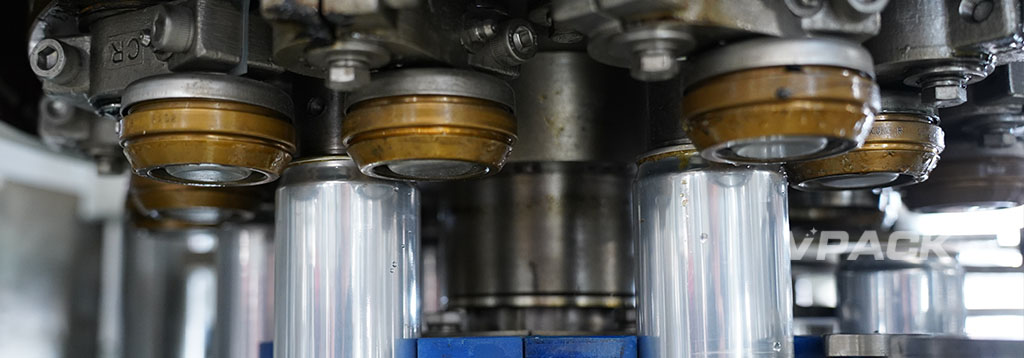
After filling, the pop cans enter the sealing device, where the lids are automatically pressed and sealed tightly, preventing liquid leakage and external contamination.
6. Quality Inspection and Sorting
The sealed pop cans undergo rigorous quality inspection, including checking the filling volume and seal integrity. Non-compliant products are automatically rejected, ensuring high-quality output.
7. Output Conveyance
Approved products are conveyed through a belt to the next process, such as packaging or storage, making the entire filling process efficient and automated.
Conclusion
With its efficiency, precision, and hygiene, the pop-can filling machine has become widely used in industries such as food, beverage, and chemicals. Understanding its working principle can help businesses optimize their production processes and enhance product quality, providing a better experience for consumers.
Through this introduction, we hope you have gained a comprehensive understanding of how a pop-can filling machine works. If you have further inquiries or needs regarding filling machines, feel free to contact our professional team.